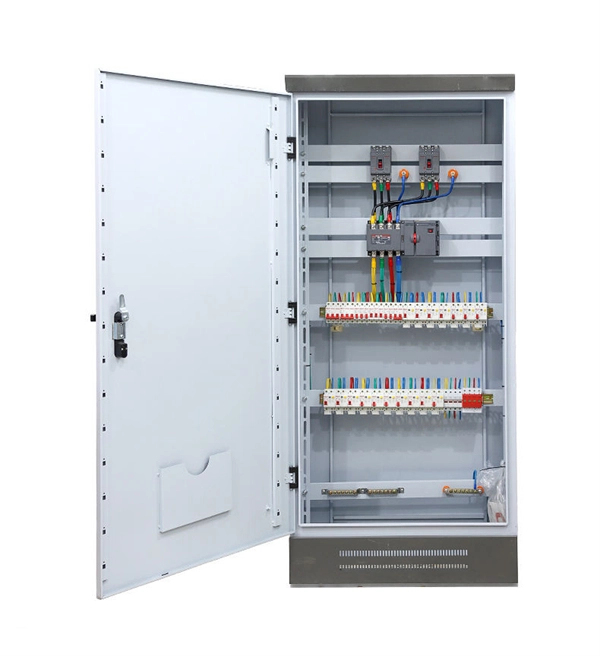
Distribution boxes are electrical enclosures designed to centralize power distribution, available in various sizes, port configurations, and IP-rated housings, with prices varying by capacity, material, and features.Specifications
Construction and Materials: Distribution boxes are typically made from robust materials such as UL-compliant plastics or aluminum, offering durability and resistance to environmental factors. Many industrial models are IP67-rated, providing protection against dust, moisture, and vibration, suitable for harsh environments . Connectivity and Ports: They support M8, M12, or M16 connectors, with options for 4, 6, or 8 ports, either single or dual pre-wired configurations. LED indicators for power and function are common, and pre-wired PUR cables are available in standard lengths of 1M, 2M, 3M, 4M, 5M, and 10M . Some units allow PNP or NPN wiring depending on the application . Internal Components: Distribution boxes house bus bars, circuit breakers, fuses, and switches, which safely divide incoming power into subsidiary circuits. They are essential for preventing overloads and short circuits, ensuring safe electricity flow throughout residential, commercial, or industrial facilities . Customization: Many manufacturers offer custom labeling, coding, and pre-wiring options for specific applications, including high-flex cables for moving machinery or automated systems . Identification labels and integrated LEDs simplify troubleshooting and maintenance.
Labels and Identification
Distribution boxes often come with pre-printed or customizable labels to identify circuits, ports, or functions. This improves safety, reduces installation errors, and facilitates maintenance. Labels can be tailored for industrial automation, robotics, or processing facilities, and some units include LED indicators for visual status monitoring .
Pricing
The cost of distribution boxes varies widely based on type, capacity, material, and features:
- Residential units: Basic single-phase boxes typically range from $50 to $200, depending on the number of circuits and safety features .
- Commercial and industrial units: Three-phase or high-capacity boxes with advanced monitoring, IP-rated enclosures, and pre-wired configurations can range from $200 to $1,000 or more .
- Customization and advanced features: Adding smart monitoring, specialized labeling, or non-standard cable lengths may increase the price, and higher minimum order quantities (MOQ) may apply for non-standard configurations . Cost Considerations: Beyond the purchase price, installation, maintenance, and long-term operational efficiency should be considered. Weather-resistant or outdoor-rated enclosures generally carry a premium, but they provide long-term reliability and reduced downtime .
Summary
Distribution boxes are versatile, durable, and customizable enclosures that centralize electrical power distribution. When selecting a box, consider port configuration, IP rating, internal components, labeling options, and cable lengths. Pricing depends on capacity, material, and additional features, with industrial-grade units costing significantly more than residential models. Proper installation and labeling ensure safety, efficiency, and ease of maintenance .